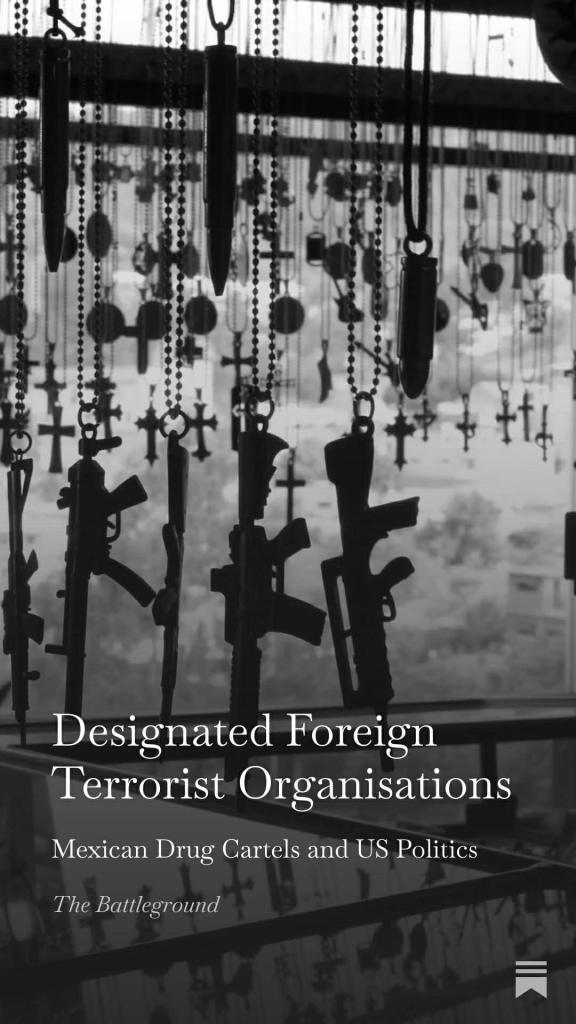
i have a new interview in The Battleground with Malika Criezis about the CJNG cartel’s wave of attacks in Mexico in February. To what extent was this a political action? How is the CJNG adopting new, 21st century strategies, similar to those of groups like ISIS? And what are the implications of the cartel being declared an FTO?
At the end of February, the Cártel de Jalisco Nueva Generación, or CJNG, gained international attention through a series of coordinated attacks across Mexico in response to government forces killing their leader, “El Mencho.” Across twenty states, police and soldiers were assaulted, businesses were set on fire, and roads were blockaded. While the use of extreme violence by the cartels is nothing new, this time it had a political feel.
Drug trafficking violence has plagued Mexico for decades, giving the country a dark reputation. But Mexico is a large country, and especially in recent years, many areas have become much wealthier and more stable. Correspondingly, an increasing number of Americans have moved there, taking advantage of lower costs and the warmer climate, especially to cities like Puerto Vallarta on the western coast.
However, the cartels have never disappeared.
CJNG has long possessed military-grade weapons, using RPGs to shoot down a military helicopter, attacking a US consulate, and, more recently, deploying drones. But the February attacks did not only target the military and police. They also focused on destroying businesses, especially in the tourist-heavy city of Puerto Vallarta. In the state of Jalisco alone, there were arson attacks against 80 Oxxo convenience stores, leading to up to 6,000 more closures across the country for the day.
This wasn’t just revenge. It was a show of power.

